

QUICK ANSWER
Pack VHS tapes in a sturdy cardboard box, not a padded envelope. Keep each tape in its case, stand the tapes on edge like books, and fill every gap with bubble wrap so nothing moves when you shake the box. Put a note with your name, phone number and a list of the tapes inside, then ship early in the week with tracking so the box doesn't sit in a hot or cold warehouse over a weekend.
People often tell me the scariest part of getting their tapes digitized isn't the cost or the wait. It's taping up a box of the only copies of their kids' birthdays and handing it to a stranger at the post office.
That worry makes sense. But tapes are sturdier than most people think, and the things that actually hurt them in the mail are easy to avoid: a flimsy envelope, a box where the tapes slide around, and a few days sitting in a hot truck or a freezing warehouse.
Here's how I'd pack a box of family tapes, whether you're sending them to me or to anyone else.
What's the safest way to pack VHS tapes for shipping?
The short version, in order:
- Pick a sturdy cardboard box a little bigger than your stack of tapes, with room for a couple of inches of padding on every side.
- Leave every tape in its case. If a case is missing, wrap that tape on its own.
- Label each tape, even with a strip of masking tape and a marker, so nothing gets mixed up.
- Line the bottom of the box with bubble wrap.
- Stand the tapes on edge, spines up, like books on a shelf.
- Fill every gap with more bubble wrap, then add a layer on top.
- Do the shake test. Close the lid and give the box a gentle shake. If you feel anything shift, add more padding.
- Add a note inside with your name, phone number and a list of the tapes.
- Seal it well with packing tape across every seam.
- Ship it early in the week, with tracking, and keep your receipt.
That's it. The rest of this post explains the why behind each step, plus a few questions people ask me.
Box or padded envelope?
Use a box. A padded envelope works for one paperback, but a VHS case is a hollow plastic shell. In an envelope it gets bent, stacked under heavier parcels and pushed through sorting equipment, and the case or the little door over the tape can crack.
A box spreads that pressure out. It doesn't need to be new, just firm, with all its flaps intact. Skip boxes with cut-out handles; they're weak spots and let dust in.
If you have a lot of tapes, use more than one box rather than one giant one. The Bay Area Video Coalition, a nonprofit that digitizes tapes for archives and families, suggests keeping each box under 30 pounds. The Northeast Document Conservation Center (NEDCC) puts it more simply: no heavier than an average person can safely lift and carry. Heavy boxes get dropped. Number them ("Box 1 of 2") so you and the person receiving them know everything arrived.
Should VHS tapes stand up or lie flat in the box?
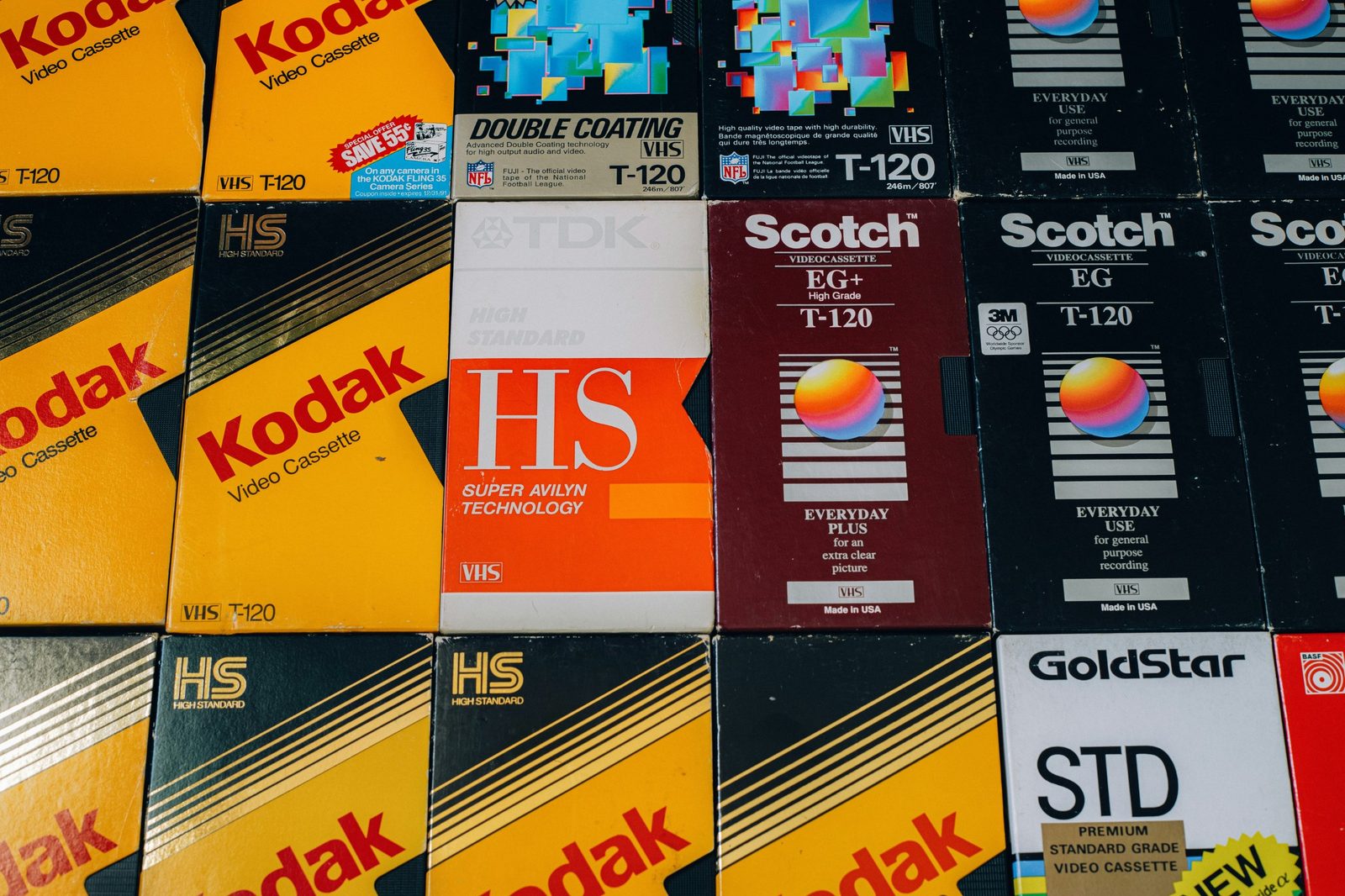
Stand them up. NEDCC's guide to shipping audiovisual media says to ship tapes the way you store them: on edge. BAVC says the same thing even more plainly: orient your tapes vertically, not horizontally.
Archivists agree on this one. The old Ampex tape care guide, published by the Council on Library and Information Resources, gives the same advice for storage: keep cassettes vertical.
Pack them snugly, like books on a shelf, so they hold each other up. NEDCC's main point is that the thing to avoid most is shifting and shock.
What's the best padding for shipping tapes?
Bubble wrap. BAVC calls thick bubble wrap the best packing material for tapes. You don't need to wrap every tape on its own if there's plenty between the tapes and the walls of the box.
A few other things work well in a pinch: clean towels, folded crumpled paper, or a couple of soft T-shirts. What you're after is a snug fit, with no empty space for the tapes to slide into.
Avoid packing peanuts. BAVC warns against them specifically. They settle during the trip, so a box that felt full at the post office arrives with tapes rattling around the bottom. They also get into everything.
| Use | Avoid |
|---|---|
| A sturdy cardboard box | Padded or plain envelopes |
| Each tape in its own case | Loose tapes rubbing together |
| Tapes standing on edge | Tapes stacked flat in a tall pile |
| Bubble wrap, towels, crumpled paper | Packing peanuts |
| Boxes you can lift easily | One box packed with 80 tapes |
| A list of tapes inside the box | Nothing inside but the tapes |
| Shipping Monday to Wednesday, with tracking | Shipping Friday, or right before a holiday |
Can heat, cold, X-rays or magnets damage tapes in the mail?
Heat and cold are the real concern. NEDCC recommends keeping tapes in transit below 75°F where you can and avoiding big swings in temperature and humidity. You can't control the inside of a delivery truck, but you can control how long your box sits in one. That's why timing matters (more on that below).
X-rays are not a problem. This is one of the most common worries, so it's worth being clear. The Ampex guide states that X-rays have no effect on recorded or unrecorded tapes. Fujifilm, which makes magnetic tape, says it is safe to X-ray all magnetic media.
Magnets can be. A strong magnet close to a tape can damage what's recorded on it. Fujifilm recommends keeping magnetic media at least 3 inches from possible sources. In practice that means: don't pack tapes in the same box as speakers, old radios, tools with magnets, or a magnetic photo frame. A couple of inches of bubble wrap all around also keeps tapes away from anything outside the box; the Ampex guide suggests about 2 inches of nonmagnetic material all round as the best protection for shipping.
If your tapes have been in a hot attic or a damp basement for years, that matters far more than anything the mail will do to them. My post on how long VHS tapes last covers what time and storage do to tapes.
When is the best time to ship?
Early in the week. Both BAVC and NEDCC recommend shipping Monday through Wednesday so a box doesn't sit in a warehouse over the weekend. NEDCC also suggests avoiding major holidays and stretches of extreme cold, heat or storms.
That's worth keeping in mind right now. With Thanksgiving on Thursday this week, a box mailed on Wednesday afternoon may spend a long weekend waiting. If you can't get it out early in the week, it's fine to hold it until the following Monday.
In December, the mail gets busier and the weather colder. If you're sending tapes to be ready for Christmas, my post on giving home movies as a Christmas gift talks about timing.
Which shipping service should I use?
Any major carrier is fine. What matters most is tracking, so you can see where your box is and know when it arrives. Keep your receipt and tracking number until you hear the box has been received.
Media Mail is the cheapest USPS option and lists "sound and video recordings" among what it can carry. Two things to know before you choose it: USPS says Media Mail is not sealed against postal inspection, so the box can be opened to check what's inside, and it can't contain anything that doesn't qualify. Many people would rather pay a little more for a faster service with a firmer delivery date.
About insurance: NEDCC notes that carriers may limit how much they'll pay for some kinds of items, and that real insurance on something valuable may need a separate policy. For home movies, the honest truth is that no insurance can replace them. Good packing and tracking do more to protect them than any declared value.

What should I put inside the box?
Besides the tapes and padding, add:
- A note with your name and phone number. If the outside label gets torn or wet, the box can still find its way home.
- A list of the tapes. Number them to match the labels on the tapes ("1. Christmas 1989", "2. Unlabeled", and so on). It's the easiest way to confirm everything arrived.
- A copy of the shipping address. BAVC suggests printing two labels: one for the outside of the box and one to put inside.
- A note about any damaged tapes, so they're handled with care from the moment the box is opened.
If you're sending tapes from several relatives' houses in one box, my post on gathering the family's tapes at Thanksgiving has a simple numbered inventory you can use as your packing list.
What about broken, moldy or loose tapes?
Send them, but don't try to play them first. Running a damaged or moldy tape through a VCR can make the damage worse. Don't try to fix it yourself, either.
Pack it the same way as the others. If it looks moldy (white or fuzzy spots on the tape or inside the window), put it in its own zip-top bag so it doesn't touch the other tapes. Then mention it on your order form. Many snapped tapes can be repaired before they're transferred.
Sending your tapes to Rewind
If you'd like me to digitize your tapes, the order of things is simple:
- Fill out the order form with a rough idea of what you have. It takes about two minutes, and I'll reply personally to confirm the details.
- Pack your box using the steps above and ship it with tracking. You pay the shipping to Rewind.
- I handle every tape myself here in Spring Hill, Tennessee. Nothing goes to an outside lab.
- Your files arrive by private Google Drive link, usually in 2–3 weeks.
- Your originals come home. Rewind pays the return shipping, with tracking, and every original is returned.
Tape transfer is $30 for one tape, and $19 each for two to 24, with the price per tape dropping for bigger orders. The pricing page has the full list, and how it works walks through each step. If you're near Spring Hill, Columbia, Franklin or Nashville, you can skip the box entirely and drop your tapes off by appointment.
Questions before you pack? Call or text me at (615) 430-7396. I'm happy to talk it through.
Common questions
Can I mail VHS tapes in a padded envelope?
I wouldn't. A padded envelope gets bent, stacked under heavier boxes and run through sorting machines, and a tape case can crack under that. A small, sturdy cardboard box with bubble wrap around the tapes costs a little more and protects them far better.
Will airport or postal X-rays erase my tapes?
No. The Ampex tape care guide says X-rays have no effect on recorded or unrecorded tapes, and Fujifilm, a tape manufacturer, says X-ray inspection of magnetic media is safe. Strong magnets are the real risk, so don't pack tapes next to speakers or anything with a magnet in it.
Can I ship VHS tapes by Media Mail?
USPS lists 'sound and video recordings' among the items Media Mail can carry, and it's usually cheaper. Two things to know: Media Mail is not sealed against postal inspection, and the box can't include anything that doesn't qualify. For family tapes, many people prefer a service with tracking and a firmer delivery date.
Should I take the tapes out of their cases to save space?
No. Leave each tape in its case. The case keeps dust off the tape and protects the little door over the tape itself. If a case is missing, wrap that tape on its own in bubble wrap or a clean cloth and mention it in your note.
What should I do with a broken or moldy tape?
Don't try to play it, and don't try to fix it yourself. Pack it like the others, bag it separately if it looks moldy, and mention it on your order form so Jason knows before he opens the box.
Sources
- Shipping of Media Carriers, Fundamentals of AV Preservation (NEDCC)
- 4.6 Packing and Shipping Audio Media (NEDCC)
- Shipping Your Tapes to BAVC (Bay Area Video Coalition)
- Ampex Guide to the Care and Handling of Magnetic Tape (CLIR)
- Stray Magnetic Fields: Threat of Accidental Magnetic Media Erasure (Fujifilm)
- What is Media Mail? (USPS)

Jason owns Rewind VHS Transfers in Spring Hill, Tennessee, and handles every order himself, for families in all 50 states.
More about Jason

